
HERE TO HELP YOU DRIVE CHANGE
Insights
Executive perspectives, research notes, and practical observations on leadership, organizational readiness, governance, and strategic execution.
Organizations rarely struggle because they lack ideas. More often, they struggle because strategy, leadership, governance, and execution become disconnected over time.
Insights is where PCI explores the questions behind organizational performance. Here you’ll find executive perspectives, emerging research, practical observations from strategic planning engagements, and the thinking that continues to shape the PCI Organizational Readiness™ methodology.
Some articles challenge conventional assumptions. Others introduce new frameworks or highlight patterns observed across leadership teams, boards of directors, and growing organizations. Together, they reflect an ongoing commitment to helping leaders think more clearly before acting more effectively.
Whether you’re preparing for strategic planning, navigating organizational change, or simply exploring better ways to lead, we hope these insights provide useful perspectives for your own organization.
What You’ll Find Here
Executive Perspectives
Thought leadership articles exploring leadership, governance, organizational design, culture, execution, and the future of community banking.
Research Notes
Short observations connecting current research, executive practice, and emerging organizational trends.
Framework Spotlights
Focused explanations of the models and frameworks that comprise PCI’s Organizational Readiness™ methodology.
Book Notes
Executive reflections on influential books and research that continue to shape strategic thinking and organizational leadership.

When Good People Keep Compensating for Weak Systems
Every community bank has people who keep things moving.
They know whom to call when a decision stalls. They catch the missing information before it becomes a customer problem. They remember the exceptions, bridge the gaps between departments, and step in when a process breaks down.
Their commitment is an asset. It can also make operational weaknesses difficult to see.
When capable people repeatedly compensate for weak systems, the work still gets done. Customers still receive attention. Deadlines are met. From the outside, the bank may appear to be functioning well.
Inside, the same employees may be carrying an increasing burden.
For community bank executives who sense organizational pain points but are unsure where to start, this is a useful place to look: Where does getting the job done depend on someone repeatedly stepping in to make the process work?
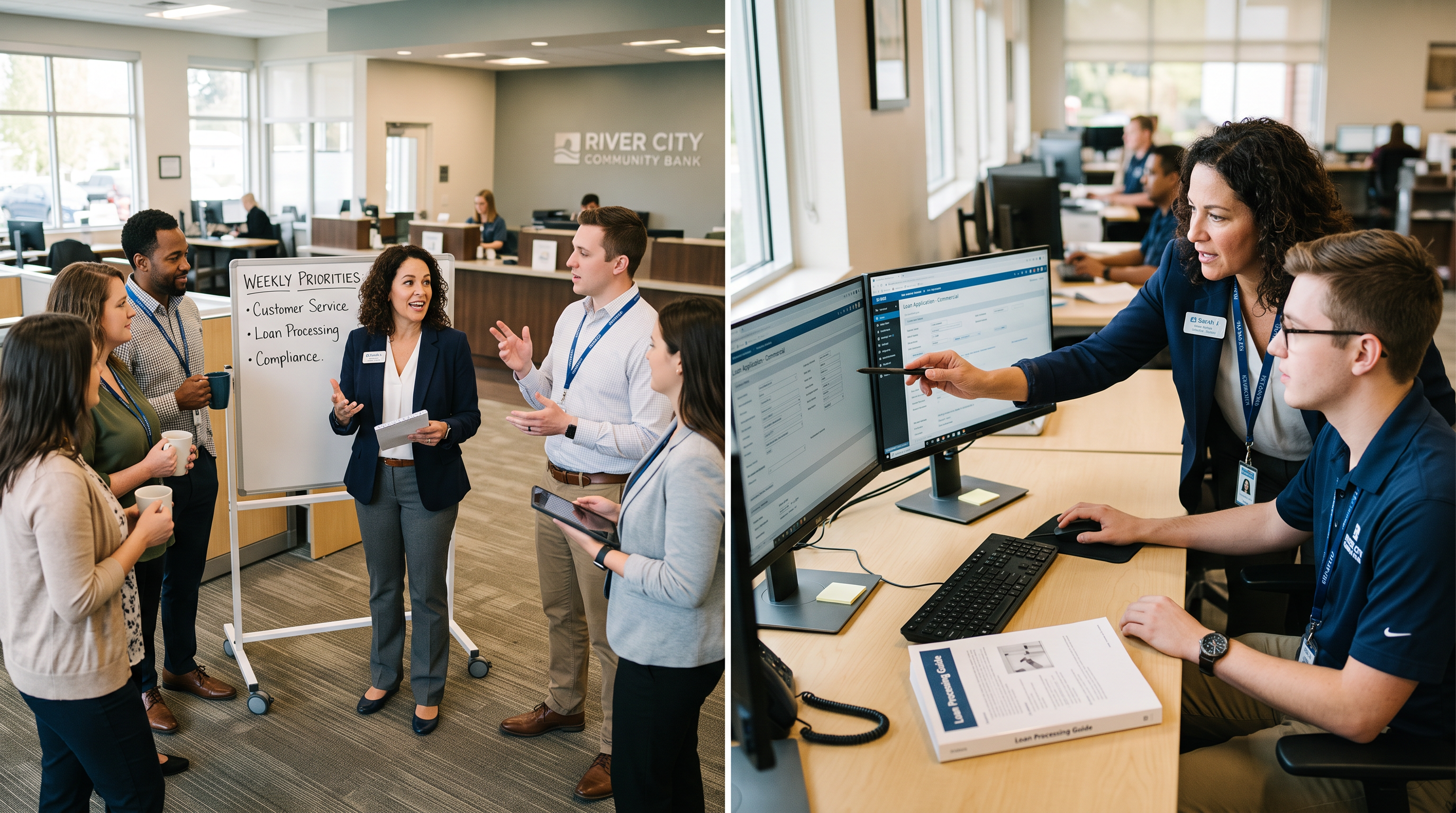
When extra effort becomes the operating model
Occasional problem-solving is part of banking. Customers have unique circumstances, exceptions require judgment, and unexpected issues arise.
The concern begins when the same problems require the same interventions week after week.
A manager continually tracks down information that should be readily available. A longtime employee answers questions about a process no one has documented. A department head resolves recurring confusion over who owns the next step. A president approves routine decisions because authority has never been clearly assigned.
Each intervention may seem small. Together, they consume time and attention that could support customers, employee development, and the bank’s future.
Because strong employees find ways to make things work, leadership may underestimate the underlying problem. The immediate issue gets resolved, while the conditions that created it remain.
Over time, exceptional effort becomes an everyday expectation.
The burden can hide behind a strong culture
Community banks rightly value responsiveness, teamwork, and personal service. Employees take pride in helping colleagues and doing what customers need.
Those strengths can make it uncomfortable to question how work gets done.
An employee may hesitate to raise a recurring problem because stepping in has become part of being dependable. A manager may accept constant follow-up as a normal responsibility. Leaders may view an informal process as evidence of flexibility, even when it leaves people uncertain about what happens next.
The distinction matters.
Teamwork works best when people have clear responsibilities and can support one another. Responsiveness is easier to sustain when employees have the information and authority they need. Personal service benefits from processes that leave time for meaningful customer conversations.
When those supports are missing, the bank asks its people to supply the difference through memory, persistence, and extra effort.
Eventually, that can change the employee experience. The people most committed to the institution may become the most exhausted by the way it operates.

Start with the recurring rescue
A leadership team does not need a complete modernization plan to begin identifying friction. It can start by examining one recurring problem.
Ask employees and managers:
What work regularly gets stuck?
Who steps in to move it forward?
What does that person know, find, or decide that others cannot?
What would help the next person complete the work successfully?
These questions bring attention to the conditions around the work. They can reveal unclear ownership, missing documentation, duplicate effort, inaccessible information, or decision authority that sits too far from the people doing the job.
Consider a routine request that repeatedly reaches the president’s desk. The president may resolve it quickly, making the arrangement appear efficient. But the recurring escalation deserves examination. Does a manager lack authority? Are the criteria unclear? Is the necessary information unavailable?
Understanding why the request escalates creates a better starting point than simply asking everyone to move faster.
Make the improvement useful to the people doing the work
Once a recurring problem is clear, leaders can ask:
What should become easier because of the change we make?
The answer should be concrete.
Employees should know who owns the next step. Managers should be able to find reliable information. Routine decisions should move within clear authority. A new employee should be able to learn a process without depending entirely on one experienced colleague.
The appropriate improvement may involve technology. It may also involve clearer responsibilities, better documentation, or a simpler workflow.
The purpose is to reduce the repeated effort required to complete ordinary work while preserving judgment where it adds value.
A relationship banker should have more time to understand customers. A manager should have more capacity to coach employees. An executive should have more room to address the bank’s direction and develop its future leaders.
Those are practical measures of whether an operational change is helping.

Protect what makes the bank valuable
Addressing weak systems can raise concerns about changing the bank’s culture. Familiar practices often carry a sense of history and identity.
Leaders should be precise about what they want to preserve.
Personal relationships, community knowledge, accessibility, and sound judgment are qualities worth protecting. The operating practices surrounding them deserve regular examination.
Documenting a longtime employee’s knowledge helps others benefit from that experience. Clarifying decision authority helps managers respond confidently. Improving information access makes it easier to give customers timely answers.
These changes can strengthen the bank’s ability to deliver the service it values.
The leadership challenge is to distinguish between a practice that creates distinctive value and one that survives because committed people keep making it work.
Look beyond the people who can manage it today
Dependence on a few experienced employees also has implications for succession.
A leader with decades of relationships may navigate informal communication easily. A successor will need dependable ways to obtain information and coordinate decisions.
An employee who knows every exception may manage an undocumented process confidently. The next employee will need that knowledge made accessible.
Today’s leaders should consider what happens when the person who routinely rescues the process is unavailable, changes roles, or retires.
That question can expose work the institution needs to do while experienced people are still available to help. Preparing successors includes giving them an organization they can lead effectively.
Give good people a stronger organization to work within
At PCI Performance Management, we believe modernization should create greater capacity for the human qualities that make community banks valuable.
That work can begin with a recurring handoff problem, a routine decision that always escalates, or a process that depends too heavily on one person’s memory.
Identify the friction. Understand why it persists. Make a focused improvement. Then assess whether the work has become easier and more dependable.
Good people will always be essential to a successful community bank. Their judgment, relationships, and commitment deserve an organization that supports them.
Where are your strongest people repeatedly stepping in and what would help the work succeed without requiring that intervention every time?


Looking for our flagship publications?
Explore the PCI Executive Brief Library for in-depth executive publications designed for CEOs, executive teams, and boards of directors.
Continue Building Organizational Readiness
Learning is only the beginning.
Explore PCI’s assessments, executive education programs, and strategic planning services designed to help leadership teams move from insight to organizational capability.
Explore Organizational Assessments
Explore PCI Executive Academy
Learn About Strategic Planning
